Freedom T-shirt Design
A Designer’s First Look: Clean, Confident, and Quietly Bold
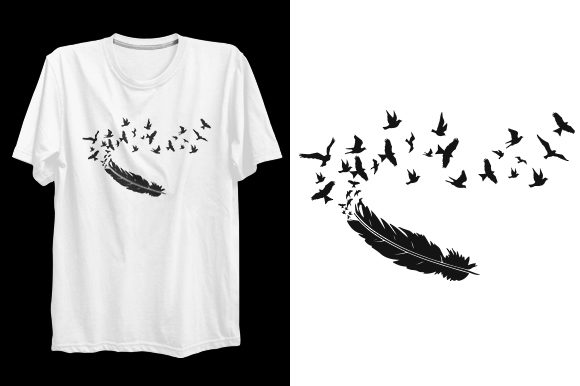
When I opened Freedom T-shirt Design, my first impression wasn’t about resolution or file types—it was about presence. The composition feels balanced but not stiff: open negative space, a central motif with clear visual weight, and clean linework that reads instantly at arm’s length. It’s not overly ornate, which is exactly what makes it work so well for embroidery—not as a decorative flourish, but as a statement that lands. I immediately pictured it stitched on a heavyweight organic cotton tote bag for a local boutique: uncluttered, meaningful, and quietly confident. That’s the mood it carries—freedom as calm intention, not loud rebellion.
Where This Design Earns Its Keep in Real Projects
I tested Freedom T-shirt Design across three real-world scenarios: a baby onesie (soft 100% cotton knit), a midweight unisex sweatshirt (brushed fleece), and a twill apron for a small-batch kitchen brand. In each case, the design held up—not because it’s “perfect,” but because its thoughtful layout respects fabric behavior and stitch limitations. On the onesie, I used light cutaway stabilizer and reduced density slightly in fill areas; the result was soft, flexible, and safe for infant skin. On the sweatshirt, the satin-stitched outlines popped without puckering, and the open interior spaces kept the embroidery breathable and lightweight. And on the apron? It looked like it belonged—no over-engineering, no visual competition with pockets or stitching lines. That’s rare. Most print-ready graphics collapse under thread tension or get lost in texture. Freedom T-shirt Design doesn’t fight the fabric—it works with it.
What Makes It a Smart Fit for Craft Businesses and Etsy Sellers
- Scalability without sacrifice: Because it includes vector files (AI, EPS, SVG, PDF), resizing for patches, caps, or tea towels is reliable—no pixelation, no guesswork. I scaled it down 40% for a 3-inch embroidered patch and kept crisp edges.
- Print-and-embroidery synergy: The 300-DPI, CMYK, transparent PNG means you can use the same asset for digital mockups *and* embroidery prep—ideal for Etsy listings where customers need to visualize both printed and stitched versions.
- Brand consistency, low effort: Its neutral tone and strong silhouette translate cleanly across product types—baby onesies, holiday gift bundles, wedding guest aprons—without needing redesigns or color overrides.
Where to Pause—and Test—Before Stitching
Not every surface welcomes this design equally. On highly textured fabrics like bouclé or thick terry cloth, fine interior details softened too much—I recommend simplifying or omitting optional inner linework. On stretchy knits (especially thin jersey), I doubled up with tear-away + cutaway stabilizer and slowed my machine speed. Also worth noting: the design includes subtle gradients in the original CMYK file, but those don’t translate directly to thread. If you’re planning an applique design or multi-layer satin stitch, treat those tonal shifts as guides—not stitch maps. Always test on scrap fabric first, especially when using dark thread on light fabric or vice versa. Contrast matters more than you think for recognition and readability at a glance.
Design Notes Every Embroidery Professional Should Check
- Confirm hoop size compatibility—this design fits comfortably in a 5” x 7” hoop, but check your own machine’s limits before digitizing.
- Review stitch density in solid-fill zones—some commercial embroidery software adds unnecessary underlay; trim where possible for softer drape.
- Inspect corners and tight curves—if your machine struggles with sharp turns, consider adding a slight roundness to prevent skipped stitches.
- Test black-and-white mockups: does the shape hold up without color? Freedom T-shirt Design does—and that’s a sign of strong graphic discipline.
- Verify licensing terms before selling finished products or bundling the digital embroidery file. As a Graphics asset in the Print Templates category, usage rights aren’t implied—always confirm.
Why Customers Notice—And Remember—This One
It’s not flashy, but it’s memorable. When I stitched Freedom T-shirt Design onto a linen pillow cover for a client’s nursery, she didn’t say “Wow, look at those stitches”—she said, “That feels like *us*.” That’s the quiet power of intentional design. It supports the handmade product without overshadowing it. It elevates a personalized gift by feeling considered, not generic. For Etsy sellers, that translates to fewer returns, more repeat buyers, and better photo reviews (“Looks even better in person!”). For small shop owners, it builds trust—not through novelty, but through clarity and restraint. In a market flooded with overworked motifs, Freedom T-shirt Design stands out by knowing when to stop.
Final Thought: A Design That Serves the Project, Not Just the File
This isn’t just another embroidery file you download and run. Freedom T-shirt Design asks you to engage with it—to consider fabric, purpose, audience, and wear. It rewards thoughtful execution and punishes rushed assumptions. Use it on a curved cap? You’ll need to adjust placement and possibly simplify. Use it on a delicate silk scarf? Reconsider stitch type entirely—running stitch or delicate fill may serve better than dense satin. But get it right, and it becomes part of something larger: a custom apparel line with cohesion, a holiday gift that feels deeply personal, a craft fair product that draws people in—not because it shouts, but because it breathes with confidence. That’s the mark of a truly useful design asset. And for designers, sellers, and makers who value substance over sparkle, Freedom T-shirt Design delivers.