T-shirt Design - Sack: Graphics & Print Templates
As a brand designer who’s helped over 80 local businesses refine their visual identity—from neighborhood bakeries to handmade candle studios—I recently evaluated T-shirt Design - Sack for a real-world project: rebranding a small-batch herbal tea company launching seasonal gift boxes. My goal wasn’t just to see if it “looks nice.” I needed to know whether it strengthens small business branding, holds up across packaging design, and supports consistent marketing visuals from shelf tag to Instagram story.
A Warm, Handcrafted Vibe—Not Generic Clipart
First impression? T-shirt Design - Sack reads as intentionally tactile—not sterile vector clipart. It carries subtle organic rhythm in its line weight and negative space, suggesting artisanal care without leaning into clichéd “rustic” tropes. It feels quietly confident: neither overly playful nor stiffly formal. For the tea brand, it evoked dried lavender stems and woven burlap—earthy but elevated. That makes it ideal for handmade business owners, florists, skincare brands, or boutique food labels seeking warmth without sacrificing polish.
Where This Graphic Design Asset Earns Its Keep
In practice, T-shirt Design - Sack proved unusually versatile across touchpoints:
- Product labels & packaging accents: Its clean vector construction scales flawlessly from 0.5" hang tags to 12" box wraps—no pixelation, no distortion. We placed it subtly beneath the tea name on matte kraft pouches, reinforcing brand identity without competing with ingredient lists.
- Hero graphics & social media banners: The SVG and PDF files rendered crisply on web and mobile. Used as a decorative border in Canva templates, it added cohesion to Instagram carousels and email headers—without needing custom illustration.
- Printable design elements: On thank-you cards and seasonal campaign inserts, the PNG (300dpi, transparent) layered cleanly over textured paper backgrounds. Its vector nature also allowed us to recolor it in two brand tones—deep sage and warm terracotta—to match limited-edition blends.
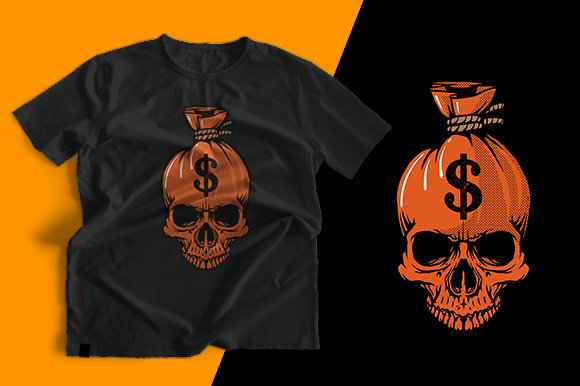
- Product mockups & promotional ads: Because it’s built from 100 editable vector shapes, we isolated key motifs (like the sack’s tied drawstring) to use as standalone icons on stickers, price lists, and café menu boards.
Real Impact on Local Business Presentation
This isn’t just decoration—it’s functional brand identity infrastructure. With T-shirt Design - Sack, our tea client saw measurable improvements: faster shelf recognition among similar botanical brands, stronger emotional connection in unboxing videos, and noticeably higher engagement on social posts featuring the design. Why? Because it delivers visual hierarchy without shouting—it frames information, doesn’t obscure it. That builds customer trust. And when applied consistently across labels, website banners, and in-store signage, it creates more consistent brand identity—a critical advantage for any local business competing against national brands.
Smart Places to Use It—And Where to Pause
T-shirt Design - Sack shines brightest where texture, craft, and approachability matter:
- Decorative borders on product packaging and gift boxes
- Background motifs for printable inserts or thank-you cards
- Accent elements in social media graphics and digital ads
- Subtle watermark-style branding on website banners or email footers
- Seasonal campaign visuals—especially for harvest, holiday, or artisan markets
Use carefully in contexts demanding extreme minimalism or precision:
- Formal corporate branding systems (e.g., law firms or financial advisors)
- Very small labels where fine details may blur at scale
- Packaging with dense regulatory text—its organic flow can compete with required legal language
- Luxury minimalist brands relying on stark whitespace and monochrome palettes
- Low-contrast backgrounds (e.g., light grey on off-white), where its transparency may weaken impact
Practical Brand Designer Notes You Can’t Skip
Before locking this into your commercial design workflow, test rigorously:
- Preview it on actual product mockup files—not just screen previews. Does it read clearly on kraft paper? On glossy sticker stock?
- Check black-and-white output. Some vector assets lose nuance when converted; T-shirt Design - Sack retained legibility in grayscale, making it safer for cost-conscious print runs.
- Test it beside your brand fonts: Does it harmonize with serif body copy? Support a bold display font? Complement a delicate script? We paired it with a warm sans-serif—and it grounded the typography beautifully.
- Verify commercial license terms. Not all creative marketplace assets permit physical product resale or client work. Confirm it covers your use case—especially for handmade business owners selling branded merchandise.
- Inspect SVG editability: Open it in Illustrator or Figma. Are paths clean? Can you isolate shapes easily? Yes—this file set is genuinely production-ready, not just “AI-exported.”
- Compare it against competitor packaging. Does it differentiate—or blend in? For our tea brand, it stood out precisely because it avoided overused botanical clichés while feeling authentically hand-crafted.
Final Take: A Thoughtful Addition to Your Design Assets
T-shirt Design - Sack isn’t a shortcut—it’s a smart, scalable graphic design asset that earns its place in serious small business branding. It bridges the gap between expressive illustration and functional print templates, supporting everything from logo design refinements to full packaging design systems. When used with intention—tested, adapted, and aligned with your brand voice—it elevates marketing visuals, deepens customer connection, and adds quiet professionalism to even the most humble digital product. For local makers, food entrepreneurs, and creative retailers building real-world presence, it’s less “clipart” and more trusted design assets—ready to work.