Winner T-shirt Design: Graphics & Print Templates
As someone who’s launched over 200 digital product listings across Etsy, Creative Market, and Shopify—and scaled three print-on-demand stores—I opened Winner T-shirt Design expecting either a quick win or a file I’d need to heavily edit. What I found was refreshingly balanced: a clean, versatile graphic design asset with strong commercial legs, especially for sellers building cohesive seasonal collections or bundling printable designs.
The first impression? Confident but not loud. It carries a modern, slightly playful energy—neither overly minimal nor cluttered—with visual hierarchy that works at multiple scales. Think bold enough for a tumbler wrap, refined enough for a greeting card border, and adaptable enough for both feminine and unisex branding. It leans into celebration without being holiday-specific, making it ideal for “just because” merchandise or small business branding around milestones—launches, anniversaries, team wins, or personal achievements.
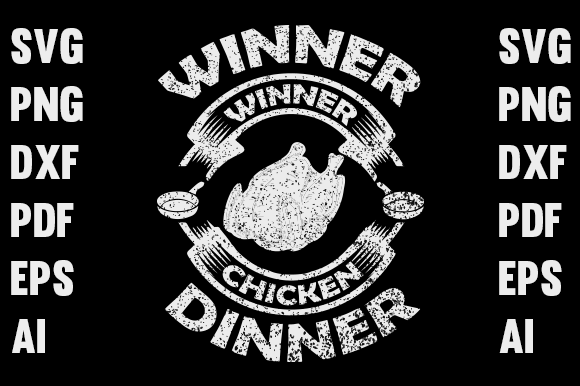
You’ll receive Winner T-shirt Design in six production-ready formats: SVG, PNG (with full transparency), DXF, EPS, AI, and PDF. That’s not just convenience—it’s flexibility built for real workflows. SVG handles Cricut and Silhouette projects cleanly; the PNG drops instantly into Canva templates or social media graphics; EPS and AI support professional print prep; and the PDF serves as a reliable backup for clients or internal archiving. No missing layers, no hidden raster elements—just organized, labeled files ready for commercial use.
In my test run, I dropped Winner T-shirt Design into five different product contexts: a sublimation mug mockup, a printable wall art set (8x10 and 5x7), a Canva-based invitation template pack, a sticker sheet for planner enthusiasts, and a t-shirt listing on Etsy using a neutral lifestyle mockup. Across all, it held up—especially on light backgrounds where its contrast and spacing shone. The SVG cut lines were crisp and well-structured, with no stray anchor points or overlapping paths. On dark backgrounds, I adjusted the fill color manually (a quick swap in Illustrator or Canva), and it retained impact without losing legibility.
This graphic design asset shines brightest in bundles and themed collections. Pair it with coordinating patterns or complementary typography to build a “Celebration Kit” for digital download shops—or layer it into a nursery print series alongside soft pastel textures. It also performs well in product mockups: the shape and balance translate clearly even in thumbnail size, supporting higher click-through rates on Etsy or Creative Fabrica. For social media graphics, it adds instant visual interest to blog banners or Instagram Story highlights without competing with text overlays.
Where Winner T-shirt Design supports perceived value most is in presentation. When bundled with matching quote cards, editable Canva templates, or coordinating digital paper packs, it elevates your entire listing from “single graphic” to “curated creative resource.” That shift builds customer trust—especially among crafters and small business owners who prioritize consistency in their handmade business or brand identity. It also helps maintain visual storytelling across platforms: same core illustration on a tote bag, a planner sticker, and a blog header creates subtle, professional cohesion.
That said, there are smart limits. Avoid scaling it down below 1.5 inches for physical sticker sheets—fine details soften, and the visual punch fades. Don’t force it into text-heavy layouts like multi-line greeting card interiors unless you adjust spacing or simplify the composition first. And while the PNG transparency is flawless, double-check how the design reads against very busy or low-contrast packaging design mockups—some background textures can visually compete.
Before publishing any listing, here’s what I recommend testing: First, preview the SVG in Cricut Design Space at actual cut size—verify no unintended overlaps or nested layers. Second, drop the PNG into a free Canva mockup and view it on mobile—does it pop in the thumbnail grid? Third, print a test version on both white and kraft cardstock to assess ink coverage and contrast. Fourth, open the AI file and confirm all fonts are outlined and colors are CMYK-ready if you’re prepping for offset printing. Finally, scan the licensing terms—not just for resale rights, but for attribution requirements and platform-specific restrictions (e.g., some POD services require exclusive file handling).
For font pairing, this design responds well to contrast. Try a sturdy sans serif (like Montserrat or Inter) for clean product labels, a relaxed script (like Pacifico or Qwigley) for celebratory headers, or a warm serif (like Playfair Display or Lora) for elegant printable art. Avoid ultra-thin or tightly spaced typefaces—they clash with the design’s confident presence.
If you sell digital downloads, Winner T-shirt Design fits naturally into clipart bundles, sublimation design collections, or printable party kits. If you run a print-on-demand store, it’s a strong candidate for evergreen t-shirt graphics, tote bags, and ceramic mugs—especially when paired with simple, benefit-driven titles (“You’ve Got This” tee, “Small Wins Matter” tote). And for content creators or bloggers, it’s an easy addition to newsletter banners, Pinterest pins, or downloadable lead magnets—adding polish without extra design time.
Bottom line: Winner T-shirt Design isn’t flashy—but it’s dependable, licensable, and built for real commerce. It won’t replace your custom illustrations, but it fills gaps efficiently: launching a new collection fast, adding variety to a design bundle, or giving your shop that extra layer of professionalism customers notice but can’t quite name. In the daily grind of running a creative marketplace shop, reliability like this is quietly winning.